Complaints Procedure for Commercial Waste Lewisham
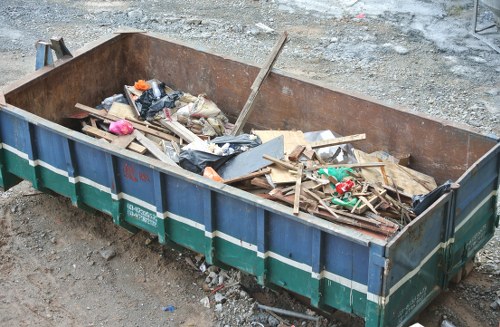 This document sets out the formal complaints procedure for issues arising from commercial waste services across our service area. It applies to any matter relating to commercial waste Lewisham contracts, collections, vehicle operations, invoicing disputes, or service failures affecting businesses. The purpose of this policy is to ensure complaints are recorded, investigated and resolved consistently and transparently while protecting the rights of affected parties and maintaining operational standards.
The scope of this complaints process covers complaints about Lewisham commercial waste collection and disposal, including alleged breaches of contract or service standards by frontline crews or subcontractors. It does not extend to matters already subject to legal proceedings or regulatory enforcement by third parties. Complaints will be assessed for admissibility and, if accepted, will enter the formal investigation sequence described below.

How to Make a Complaint
Complaints may be raised by a business representative or authorised agent. Complainants must provide a clear description of the issue, relevant contract or account reference, dates and times, and any supporting evidence such as photographs or waste transfer notes. A complaint should state the desired outcome and any interim measures requested. Complaints that do not include sufficient information may be recorded as an initial enquiry and the complainant will be invited to supply further details before a full investigation commences.Acknowledgement and Initial Assessment
On receipt, complaints will be logged in the complaints register and acknowledged in writing within five working days. An initial assessment will determine jurisdiction, potential health and safety implications, and whether immediate remedial action is required. If a complaint involves service disruption or public safety, priority handling will be authorised and appropriate operational teams mobilised to contain risk while the formal investigation is underway. Investigations will be conducted by trained personnel independent of the frontline operational team where practicable. The investigation will gather documentary evidence, interview staff involved, review vehicle telemetry and collection records, and examine site conditions. Investigators will document findings in a written report that addresses root causes, contributory factors and any mitigating circumstances. The report will also recommend corrective actions and an appropriate remedy for the complainant where liability is established.
Possible outcomes following an investigation may include: a finding of no fault, a formal apology, remedial collection or disposal, financial adjustment where losses demonstrably arise from service failure, or a commitment to operational changes. Outcomes will be proportionate, fair and designed to prevent recurrence.
Decisions and remedies will be communicated to the complainant in writing within twenty working days of acknowledgement wherever feasible. If an investigation requires more time due to complexity, the complainant will receive interim updates explaining the reasons for delay and the expected revised timeframe. Records of decisions and actions taken will be retained for a minimum retention period consistent with business records governance and regulatory requirements.
 If a complainant disagrees with the outcome, an internal escalation may be requested in writing. The escalation is a formal review by a senior manager not previously involved in the initial investigation. The escalation review will assess whether the original process conformed with policy, whether evidence was considered appropriately, and whether the remedy proposed was reasonable. The escalation decision will be final within the organisation and will be issued in writing with reasons for the conclusion.
 Confidentiality and data protection will be respected throughout the complaints lifecycle. Information disclosed by complainants will be used solely for the purposes of investigating and resolving the complaint and retained in accordance with data protection obligations. Personal data will only be accessed by staff with a legitimate need to handle the complaint, and anonymised records may be used for quality improvement and training.
Record keeping and quality assurance: All complaints and associated documentation, including investigation reports and corrective action plans, will be recorded in the central complaints log. Management will review complaint trends periodically to identify systemic issues affecting commercial rubbish Lewisham services and to drive continuous improvement. Trend analysis will inform staff training, operational changes and supplier management.
Independence and impartiality: Where potential conflicts of interest exist—such as when a complaint involves senior staff or a long-standing contractor—an external or independent reviewer may be engaged to ensure impartiality. This step will be taken at the organisation's discretion where it is necessary to preserve public confidence and procedural fairness.
Policy review: This complaints procedure will be reviewed periodically to ensure it remains effective, lawful and aligned with best practice for business waste collection Lewisham operations. Changes to the procedure will be documented and published internally; stakeholders will be informed when material changes affect how complaints are handled.
Appeals and external review: After internal escalation is exhausted, complainants who remain dissatisfied may pursue any external or statutory routes available to them under applicable law. The organisation will cooperate with regulators and third-party adjudicators where jurisdiction and legal processes require information or access.
Final provisions: This complaints procedure aims to be transparent, fair and timely. It supports accountability for commercial refuse Lewisham services and ensures that business waste issues are addressed consistently. Amendments to this procedure will be made as necessary to uphold service standards and legal obligations.
All internal staff and contracted parties are required to comply with this complaints procedure and to facilitate prompt resolution of issues raised by customers or affected businesses. Non-compliance by staff or contractors may result in management action in line with contractual and employment terms.
