Health & Safety Policy — Commercial Waste Lewisham Operations
 Purpose: This Health and Safety policy sets out the commitments and systems used by our commercial waste operation to protect employees, contractors, visitors and third parties while providing Commercial Waste Lewisham and surrounding area rubbish services. The policy applies to all commercial rubbish collection in the service area, including scheduled bin collections, waste transfer, skip hire operations and on-site waste management activities. It is the responsibility of management and staff to implement and maintain the standards described herein, ensuring a consistent approach to hazard control, risk assessment and safe working practices.
Scope and intent: The approach covers routine waste removal Lewisham activities, vehicle-based collection, manual handling of containers, containment of hazardous materials and safe operation of mechanical handling equipment. This policy aims to minimise harm through prevention, training and continuous improvement. Strong leadership will be applied to ensure compliance with industry standards and to maintain secure working environments for everyone involved in commercial rubbish services.
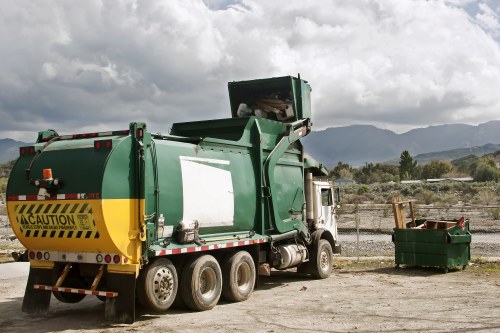 Accountability: Senior management retains ultimate responsibility for health and safety. Operational supervisors and team leaders are accountable for day-to-day implementation. Employees must take reasonable care for their own safety and that of others and follow all written procedures, risk assessments and safe systems of work. Contractors engaged for waste removal or recycling services will be expected to adhere to the same standards and to demonstrate competence before beginning work.
Risk management, training and safe systems
Risk assessment and control: All activities related to commercial rubbish collection are subject to documented risk assessments. Identified risks — including manual handling, slips, trips and falls, traffic hazards, exposure to hazardous substances, and vehicle movement — will be controlled using the hierarchy of controls: elimination, substitution, engineering controls, administrative controls and personal protective equipment (PPE). Control measures will be reviewed whenever operations change, following incidents or as part of scheduled audits.
 Training and competence: Comprehensive induction and role-specific training are provided to all staff engaged in waste collection, transfer and disposal. Training covers safe lifting techniques, use of PPE, hazardous waste identification, spill response, traffic management for collection routes and safe use of lifting and compaction equipment. Refresher training and toolbox talks are scheduled regularly to maintain competence across the team delivering Lewisham commercial waste services.
Personal protective equipment (PPE): Appropriate PPE, including high-visibility garments, gloves, safety footwear and eye protection, will be supplied and maintained. Workers are required to wear PPE for designated tasks and report defects or shortages immediately. The company will ensure PPE is suitable for the types of waste handled and that replacement is timely.
Operational safety, vehicles and hazardous materials
Vehicle and traffic safety: Fleet safety standards govern vehicle maintenance, driver competency, route planning and loading protocols. Drivers will complete pre-shift vehicle checks and report defects. Safe systems of work will manage reversing, roadside collection and interactions with the public. For night operations, additional controls such as enhanced lighting and high-visibility signage will be applied to reduce risk during collections.
 Handling hazardous and controlled waste: Waste streams that are potentially hazardous or regulated will be segregated, documented and handled only by trained staff. Chemical, medical and hazardous industrial wastes are managed according to duty-of-care requirements and accepted industry practice; containment, labelling and transfer procedures reduce exposure risks. Emergency spill kits and containment systems are available, with staff trained in their deployment.
 Manual handling and ergonomics: Safe manual handling procedures are enforced to prevent musculoskeletal injury. Mechanical aids are provided where practicable, and teams are briefed on correct lifting, pushing and positioning for bins, sacks and bulky items. Supervisors will monitor task rotation to limit repetitive strain and ensure rest breaks are observed during intensive collection periods.
Incident reporting and investigation: All accidents, incidents and near misses must be reported immediately via the company reporting system. Incidents are investigated to identify root causes and corrective actions. Lessons learned are communicated across teams and incorporated into risk assessments and training. Reporting encourages a culture of transparency and continuous safety improvement.
Monitoring, auditing and performance: Regular audits, inspections and performance reviews will assess compliance with this policy. Key performance indicators will measure training completion, incident frequency, defect reports and corrective action closure rates. Third-party audits may be employed to validate practices and support continual improvement of commercial rubbish service delivery.
Policy review and enforcement: This policy will be reviewed at least annually and whenever significant changes occur in operations or legislation. Non-compliance with health and safety requirements will be addressed through corrective action, retraining or disciplinary procedures as appropriate. The organisation is committed to providing the resources necessary to implement this policy effectively and to maintain a safe workplace for all stakeholders involved in commercial waste services across the service area.
- Key commitments: Prevent harm, comply with regulatory expectations, and promote a proactive safety culture.
- Employee responsibilities: Follow procedures, wear PPE, report hazards and participate in training.
- Management responsibilities: Provide resources, lead by example, and ensure continual improvement.
Conclusion: This Health & Safety policy defines our obligations and actions for delivering safe, reliable and compliant commercial waste services. By embedding these principles into everyday operations, the company will protect people, property and the environment while delivering professional rubbish collection and waste management solutions.
